Alternative Ventilation Strategies to ERVs in Multifamily Buildings
July 7, 2026Energy Recovery Ventilators (ERVs) are considered a best-practice solution in multifamily building design. They optimize both ventilation and energy efficiency by transferring heat and moisture between incoming and outgoing air streams.
However, in some projects, ERVs may not be included due to cost, space constraints, or design decisions. For projects without ERVs, it becomes especially important to use other strategies to maintain balanced airflow and indoor air quality across the building.
Why Airflow Balance Matters in Multifamily Buildings
Multifamily buildings rely on coordinated ventilation across many individual units stacked vertically and horizontally. When airflow is not properly balanced, it can lead to:
- Uneven indoor air quality between units
- Pressure differences between apartments and corridors
- Increased energy use from HVAC systems working harder than necessary
- Comfort issues such as drafts or stuffiness
- Moisture and condensation issues in envelope components
As buildings increase in height and number of floors, these challenges become more pronounced. Stack effect, the natural movement of air upward through a building, and pressure variations make it harder to maintain consistent performance from the bottom floor to the top. This can be exacerbated by negative pressures accumulating from floor to floor and creating issues with opening and closing doors, especially in lower floors.
Alternative Ventilation Strategies
If a project is not using ERVs, one or more of the alternative ventilation strategies below can be used to properly balance airflow.
1. Over Supply to the Corridors via DOAS
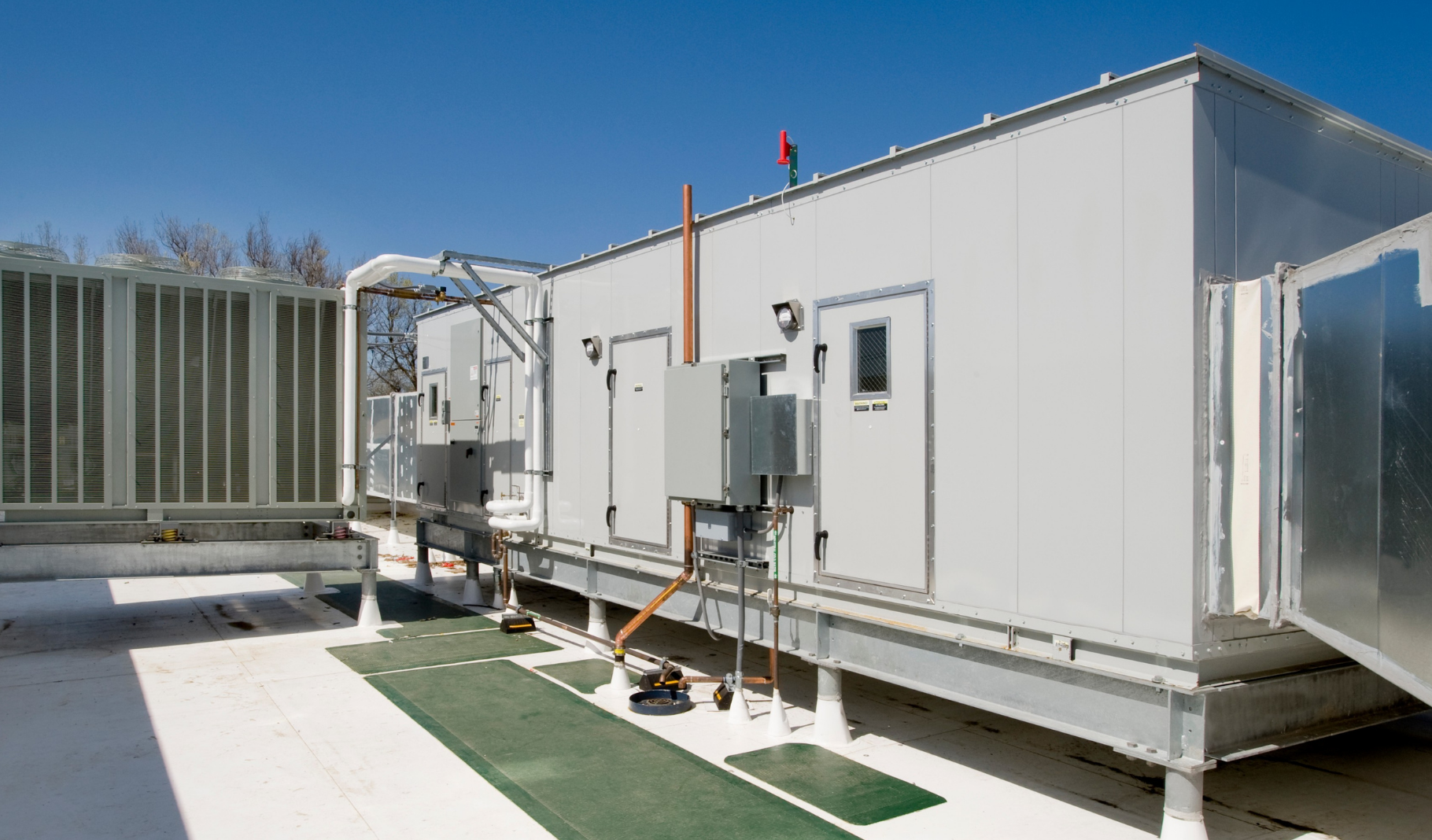
One of the most common alternatives is the use of Dedicated Outside Air Units (DOAS). In most cases these units are used effectively as a “common ERV”. Installed on the roof, DOAS collect exhaust air from apartment bathrooms throughout the building and supply conditioned outdoor air to the corridors. The corridors have an oversupply of outside air, which causes them to be positively pressurized, while the apartments are negatively pressured. The intent is for air to transfer from the positively pressurized corridor into the negatively pressurized apartments through undercut doors and other transfer pathways.
| Pros | Cons |
|
|
|
|
|
|
|
2. Exhaust Ventilation with Trickle Vents
Another common method of balancing ventilation without the use of ERVs is to have a constant exhaust flow, such as from a bathroom or kitchen, and trickle vents.
Trickle vents are openings in the exterior envelope that allow outdoor air to enter the building. The intent is for the incoming air from the trickle vents to offset the exhaust air being removed, helping to maintain ventilation balance.
| Pros | Cons |
|
|
|
|
|
3. Packaged Terminal Air Conditioner with Louver
Another option for balancing pressures within a multifamily building is to use Packaged Terminal Air Conditioners (PTAC) with built-in outside air louvers. This approach is similar to a trickle vent in that it allows outdoor air to enter the space and offset exhaust airflow. However, when the PTAC is operating, the incoming air is conditioned before entering the apartment. When the PTAC is not running, such as during periods of continuous exhaust ventilation, unconditioned outdoor air can still enter the space due to the negative pressure created by the exhaust system.
| Pros | Cons |
|
|
|
|
|
Balanced Ventilation Without ERVs – Key Points
While ERVs remain a preferred solution for many multifamily projects, alternative strategies can still achieve effective ventilation when thoughtfully designed and coordinated early in the process. The most successful multifamily projects are those where ventilation is not treated as a standalone system, but rather as an integrated part of the building’s overall energy and airflow strategy.
When ERVs are not part of the design, successful ventilation strategies typically rely on a combination of systems, rather than a single solution.
A well-balanced approach may include:
- Over Supply to the Corridor via DOAS
- Exhaust Ventilation with Trickle Vents
- Package Terminal AC with Louver
Each strategy plays a different role, but together they help maintain balanced airflow across the building.
ReVireo helps project teams evaluate ventilation strategies through energy modeling, understand code implications, and develop practical solutions tailored to each multifamily project. Whether ERVs are included in the project plans or alternative approaches are needed, our team can help ensure systems are balanced, compliant, and aligned with long-term performance goals. Contact us to discuss your upcoming projects.