Commercial Energy Modeling
At a Glance
Commercial energy modeling empowers developers and design professionals to:
Contact Our Experts Today- Evaluate and utilize different pathways for energy code compliance
- Reduce the risk of costly design changes during construction
- Identify the most cost-effective design solutions early in the project
- Achieve high-performance certifications like ENERGY STAR or LEED
- Optimize overall building performance and support long-term energy savings
- Generate permit documentation
- Qualify for incentives and specialized financing sources
What is Commercial Energy Modeling?
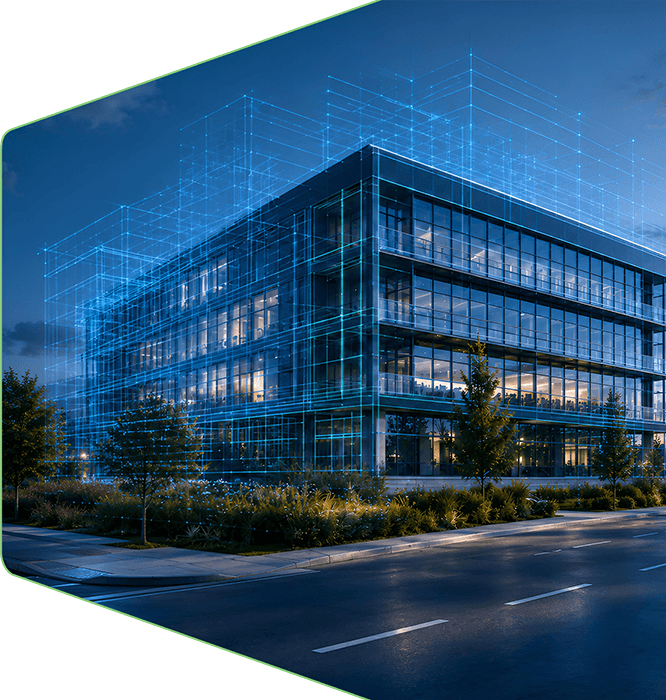
Commercial energy modeling is a detailed software simulation of hundreds of inputs, derived from drawings as well as equipment and material specifications, to predict a building’s energy performance before it is built.
An energy model evaluates key components of a building, including:
- Building envelope (walls, roof, insulation, and glazing)
- HVAC systems and ventilation strategies
- Lighting systems and controls
By modifying inputs, energy modeling can assess the performance impact of various design elements, compare efficiency strategies, and identify the most cost-effective solutions for achieving energy code compliance or certification goals.

Commercial energy modeling can be used for all commercial, multifamily, institutional, and industrial building types, including:

Office and retail buildings

Education and healthcare facilities

Apartment buildings

Warehouses and manufacturing facilities
Energy Modeling for Energy Code Compliance
Instead of a prescriptive approach (i.e., COMCheck), energy modeling can be used to comply with commercial energy code via a performance pathway that evaluates energy usages of the building as a whole. Energy modeling compares the proposed design to a code-defined baseline to determine compliance. Trade-offs between systems are permitted, creating flexibility in how energy code compliance is achieved. With this approach, project teams can make informed decisions that balance operating efficiency, construction cost, and design goals.
For example, in prescriptive compliance pathways in current commercial energy code, Energy Recovery Ventilators (ERVs) are now required in dwelling units. These systems can increase construction costs, require additional space, and add maintenance complexity. Energy modeling and performance pathways offer an alternative approach. Because compliance is based on overall building performance, there are no prescriptive requirements for ERVs. The loss of energy efficiency from not including ERVs may be offset by above-code specifications in other components, thereby reducing costs.
Commercial Energy Modeling vs. COMCheck
| Comparison criteria | Commercial Energy Modeling | COMCheck |
|---|---|---|
| Design flexibility? | HIGH | LOW |
| Avoid prescriptive energy code requirements? | YES | NO |
| Eligible for incentives and certifications? | YES | NO |
| Optimize building performance? | YES | NO |
Additional Benefits of Commercial Energy Modeling
Beyond code compliance, energy modeling can support a variety of project objectives:

Support certification goals
Energy modeling is often required for certifications such as LEED, Enterprise Green Communities, ENERGY STAR, and DOE Efficient New Homes.

Unlock incentives and financing opportunities
Many incentives and preferential financing programs require demonstrated energy performance, which energy modeling can document.

Improve building performance
Energy modeling provides insight into how a building is expected to operate, helping project teams make informed design decisions, identify efficiency opportunities, and improve occupant comfort.
Ready to make your project more efficient and cost-effective?
Commercial energy modeling turns code compliance into an opportunity for strategic advantage. ReVireo’s energy modeling experts give your team the flexibility to design smarter, control costs, and potentially avoid prescriptive requirements like ERVs.