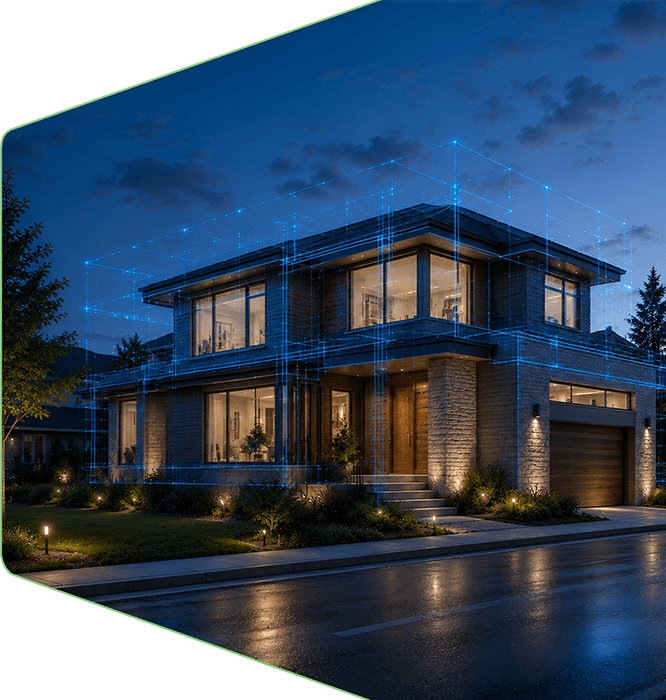
Residential Energy Modeling
At a Glance
Residential energy modeling enables developers, builders, and design professionals to:
Contact Our Experts Today- Evaluate all pathways for energy code compliance
- Minimize costly redesigns and changes during construction
- Identify the most cost-effective efficiency strategies early in the design process
- Achieve high-performance certifications, including ENERGY STAR and DOE Efficient New Homes
- Improve whole-home performance and support long-term energy savings
- Generate energy code documentation required for permitting and compliance
- Unlock access to state and utility company incentives
What is Residential Energy Modeling?
Residential energy modeling is a detailed software simulation that uses hundreds of inputs from drawings as well as material and equipment specifications to predict a home’s energy performance before it is built. The model evaluates the combined performance of key building components, such as:
- Insulation levels in walls, roofs, and floors
- Heating, cooling, and ventilation systems
- Windows and exterior doors (including performance ratings and orientation)
- Lighting and other energy-related equipment and controls
By adjusting inputs, energy modeling can evaluate the impact of different design elements and help identify cost-effective strategies to improve efficiency and meet energy code or certification requirements.

Energy modeling can be used for all types of residential buildings including:

Single Family Homes

Townhomes

Dwelling units in multifamily residential and mixed-use buildings
Residential Energy Modeling for Energy Code Compliance
Energy modeling compares performance of a proposed home design to a code-defined baseline to demonstrate compliance with residential energy code requirements. Energy modeling can support all residential energy code compliance pathways, including both prescriptive and performance options.
While the prescriptive pathway (i.e., RESCheck) verifies only individual component requirements, modeling does this as well while also unlocking performance-based pathways that provide a holistic view of building performance and helps evaluate how different building elements interact.
Performance pathways allow tradeoffs between construction hard costs and building performance. For example, insulation values can be offset by better construction quality such as tighter air sealing and reduced air leakage. These decisions can reduce the cost and difficulty of achieving code compliance.
By showing how these elements interact, energy modeling helps teams choose the most cost-effective combination of design, systems, and construction quality to meet code.
Residential Energy Modeling vs. RESCheck
| Comparison criteria | Residential Energy Modeling | RESCheck |
|---|---|---|
| Design flexibility? | HIGH | LOW |
| Evaluate all energy code compliance pathways? | YES | NO |
| Avoid prescriptive energy code requirements? | YES | NO |
| Eligible for incentives and certifications? | YES | NO |
| Optimize building performance? | YES | NO |
Additional Benefits of Residential Energy Modeling
Energy modeling can be used to achieve much more than energy code compliance.

Supports green building certifications
Energy models are often required for certifications such as ENERGY STAR, DOE Efficient New Homes and LEED.

Unlocks incentive opportunities
Energy modeling provides the documented energy performance needed to qualify for many state and utility incentive programs.

Optimizes design decisions early
By evaluating the impact of insulation levels, windows, HVAC systems, ventilation strategies, and renewable energy options, energy modeling helps teams make informed decisions before construction begins.
Ready to make your project more efficient and cost-effective?
Residential energy modeling turns code compliance into an opportunity to optimize your project. ReVireo’s energy modeling experts give your team the flexibility to evaluate the performance of design elements, control costs, and identify the best approach to meet energy code requirements without being limited by prescriptive measures.