Unlocking Alternative Energy Code Performance Pathways for Multifamily Buildings with Commercial Energy Modeling
June 12, 2026Energy code compliance for multifamily building projects continues to increase in complexity. The 2021 and 2024 versions of the International Energy Conservation Code (IECC), now in effect in many states in the Mid-Atlantic and Northeast regions, contain new requirements that can significantly affect the design and budget of new multifamily buildings.
To mitigate the impact of these new requirements, multifamily project teams are increasingly choosing to comply with energy code via alternative performance pathways. These pathways use energy modeling to increase design flexibility and avoid costly new prescriptive requirements for projects four stories or greater in height, including energy recovery ventilators (ERVs) in dwelling units.
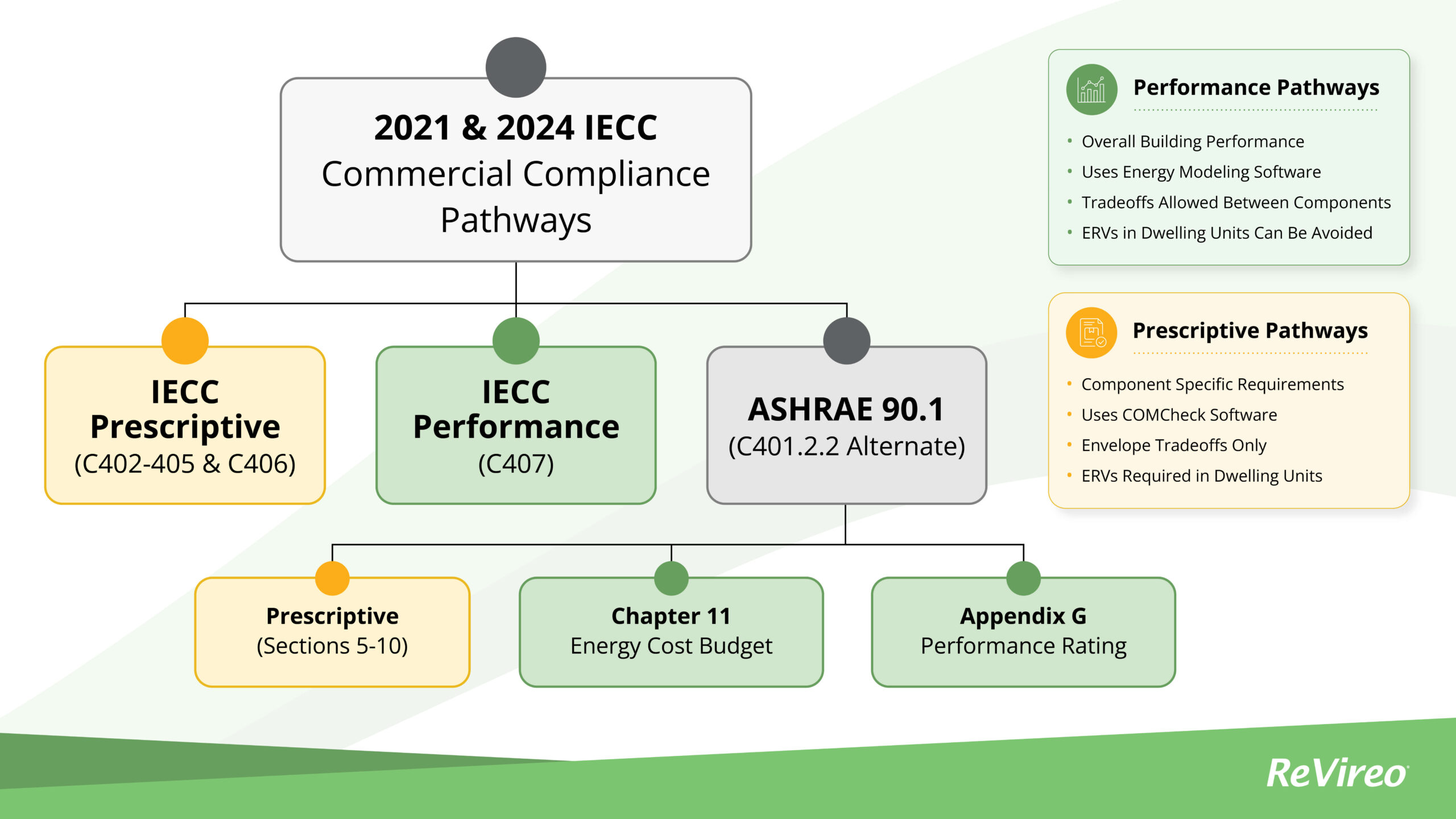
Two Sets of Pathways for 2021 & 2024 IECC Compliance
The 2021 & 2024 IECC offer two sets of pathways for buildings defined by IECC as commercial, including multifamily buildings four stories or greater in height. Each set of pathways approaches energy efficiency requirements differently, offering advantages and disadvantages.
1. Prescriptive Pathways
IECC Sections C402 through C406 and ASHRAE 90.1 Sections 5.5, 6.5, and 7.5
These pathways are the most straightforward and prescribe a set list of requirements for each building component, including lighting, heating and cooling systems, and the building envelope. If everything meets the minimum standards, the project complies. Most owners and designers are familiar with COMCheck, the software most used to show compliance via these pathways.
While these pathways are simple to follow, they do not allow much flexibility. Each requirement must be met as written, which can lead to design limitations or added system requirements. Limited trade-offs within the building envelope are permitted, but trade-offs between building components are not allowed.
Under 2021 & 2024 IECC, ERVs are required to be included in the dwelling units for multifamily projects defined as commercial, which is an important change from prior version of the IECC.
2. Performance Pathways
IECC Section C407 and ASHRAE 90.1 Appendix G and Chapter 11
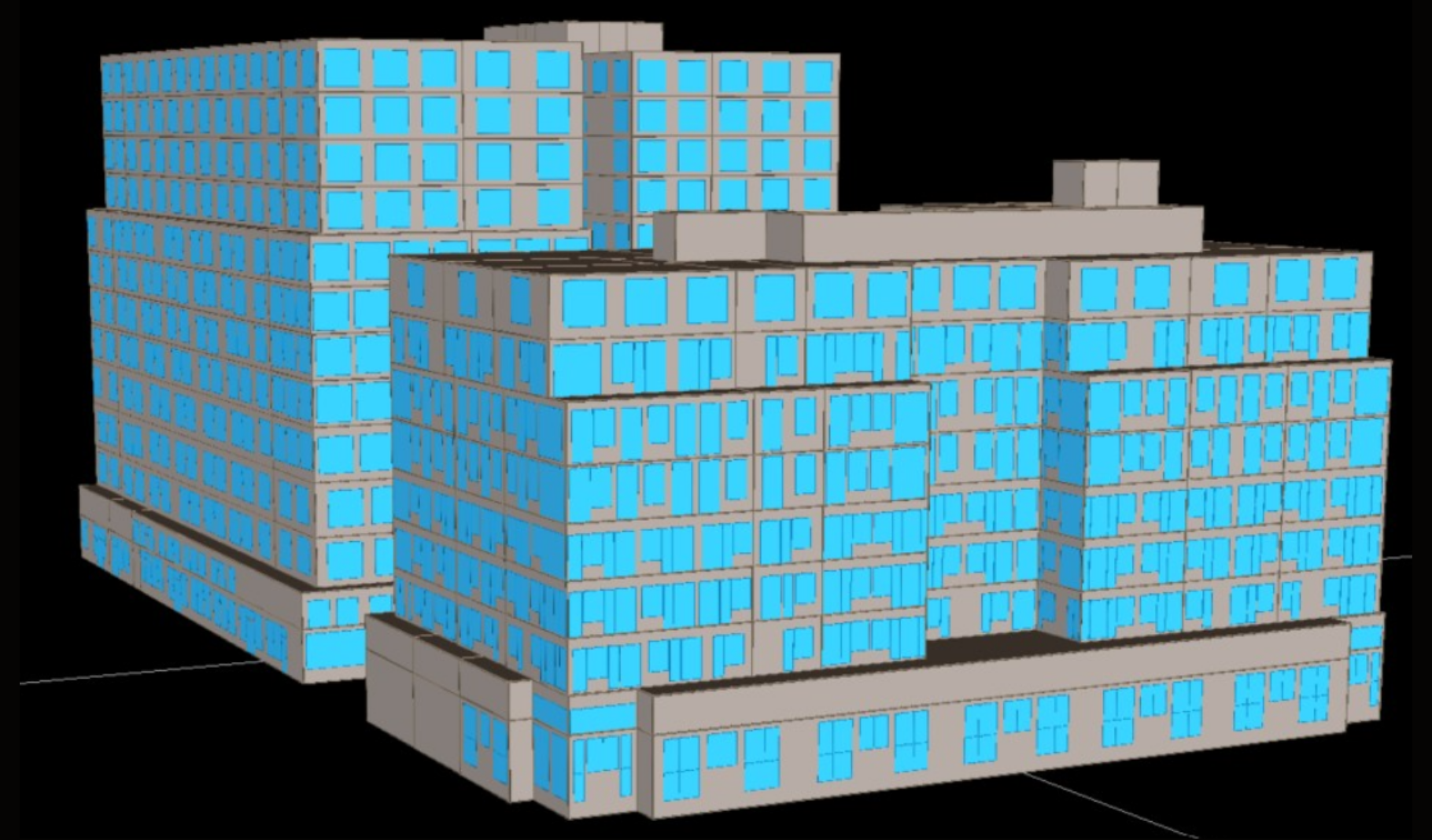
These pathways use sophisticated energy modeling software to compare a proposed building’s design to a baseline building defined by the code. If a building performs as well as or better than the baseline, it complies. These pathways allow trade-offs between building components. This flexibility creates meaningful opportunities to optimize design decisions, balance costs, and align systems with project priorities rather than following a rigid prescriptive approach.
For example, improvements in lighting efficiency may offset HVAC energy usage, or high-performing mechanical systems may create flexibility in other areas of the design, such as window specifications or continuous exterior insulation. Because of this flexibility, performance pathways are a better fit for more complex or cost-sensitive projects.
Additionally, the prescriptive requirement for ERVs in dwelling units can often be avoided, unlocking significant cost savings for multifamily projects.
2021 & 2024 IECC Commercial Compliance Pathways – Click to Enlarge
How the Performance Pathways Avoid Prescriptive ERV Requirements
Under the 2021 and 2024 IECC, there is a new prescriptive requirement that dwelling units are required to have ERVs. ERVs are designed to capture energy from exhaust air and use it to condition incoming outdoor air. They are an effective best practice, but also add cost, take up space, and require ongoing maintenance.
One of the advantages of the performance pathways is the ability to avoid prescriptive requirements, including ERVs in dwelling units. Improvements in lighting efficiency, better insulation, or high-performance glazing can offset the energy impact of not having ERVs in dwelling units. If the energy model of the building meets or exceeds the efficiency of the code baseline building, the ERVs are not necessary to comply.
By avoiding ERVs, multifamily building projects can:
- Lower initial equipment costs, unlocking significant cost savings for projects; and
- Simplify mechanical system design, making systems easier to maintain and less costly to operate.
The decision whether to utilize ERVs in dwelling units should not be solely based on construction cost comparisons. Factors like climate zone, building type, and ventilation requirements must all be carefully considered. Building developers who plan to own and operate the building for the foreseeable future may choose to include ERVs to capture long-term energy savings.
If ERVs are not utilized in dwelling units, there are additional methods to consider for balancing airflow within the building, such as adding supplemental supply or exhaust ventilation, transfer grilles, jump ducts, or dedicated make-up air strategies. In general, as buildings increase in height and number of floors, balancing airflow throughout the building becomes more challenging. Energy modeling creates the opportunity to evaluate all different ventilation and airflow balancing approaches as part of a whole-building strategy, allowing the project team to optimize performance rather than follow a one-size-fits-all prescriptive solution.
Additional Benefits of Energy Modeling
Energy modeling is at the core of the alternative performance pathways, and it is becoming more popular for good reason. Producing an energy model yields several additional benefits.
1. Smarter Design Decisions
Energy modeling evaluates how the whole building performs instead of treating each component requirement as a fixed rule. This allows design teams to make more informed decisions early in the process. Instead of overdesigning every component, teams can prioritize strategies that deliver the greatest impact, whether that is improving the building envelope, optimizing lighting, or right-sizing heating and cooling systems.
2. Maximize ROI
By identifying the most effective energy efficiency measures, energy modeling helps teams avoid unnecessary upgrades that add cost without meaningful return. It creates a clearer path to balancing performance, budget, and compliance while reducing upfront costs and still meeting energy code requirements.
3. Confidence in Real World Performance
Energy modeling provides detailed insight into how a building is expected to perform once it is built. This goes beyond compliance and helps teams anticipate energy use, improve occupant comfort, and support long term operational savings
Setting Your Project Up for Success
If you are considering a performance pathway for your project, timing of energy modeling is key. Bringing in an energy modeler early in the design process allows for better coordination and more opportunities to optimize the building. Waiting too long can limit your options and reduce the potential benefits.
It is also important for the full project team to stay aligned. Architects, engineers, and owners all play a role in shaping building performance. Small design decisions can have a large impact on energy outcomes, so collaboration is essential.
Key Takeaways
The 2021 and 2024 IECC provide multiple pathways for compliance for buildings defined as commercial, but the right choice depends on your project goals.
The prescriptive pathways are the most familiar option with straightforward requirements, but they can be restrictive and require costly equipment investment like ERVs in dwelling units for multifamily projects. The performance pathways use energy modeling, provide design flexibility, valuable performance insights, and potential cost savings in both the short and long term.
For many teams, the performance pathways and energy modeling turn compliance into an opportunity rather than a constraint. Reduce costs, minimize risk, and find the smartest pathway to compliance with ReVireo. Contact us to get started.